How to Build a Dopamine Menu (and Actually Beat the Doomscroll)

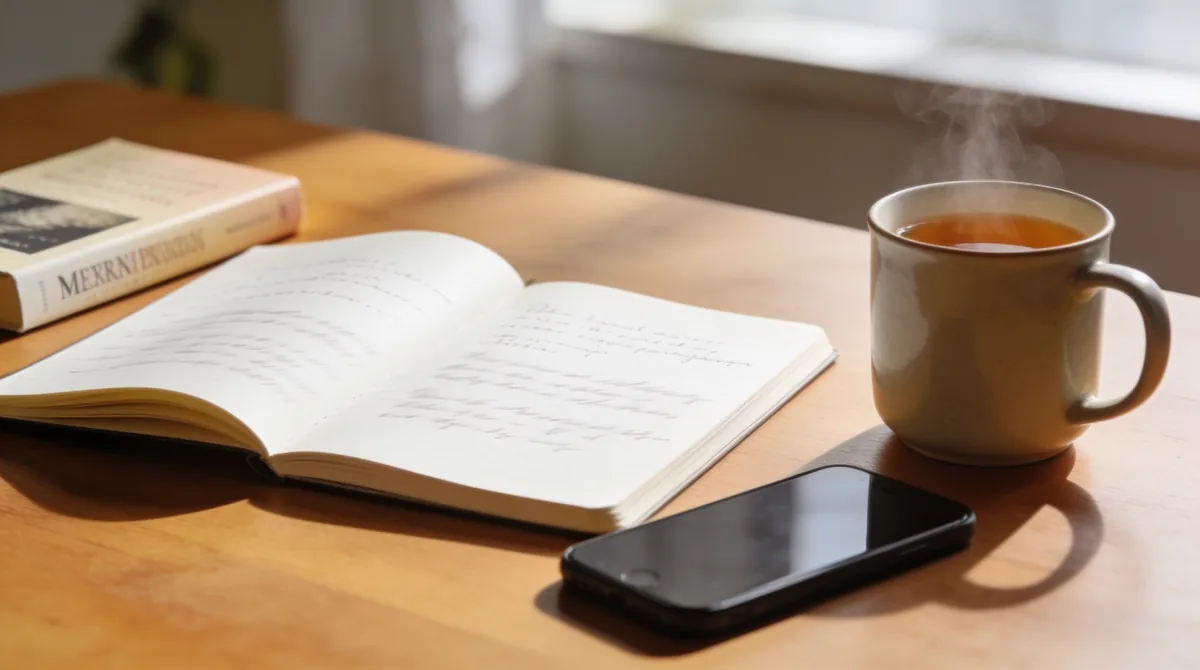
You know the moment. You have ten minutes and no clear plan for them, so your thumb finds the phone before your brain has voted on it. Forty minutes later you surface, a little foggier and no happier. A dopamine menu is a small fix for that gap: a short, pre-written list of things you actually enjoy, each with a time limit, so when you feel stuck or understimulated you have somewhere to look other than the feed. It is a planning trick, not a brain hack. If you want the same idea applied to the first hour of your day, the low dopamine morning routine is a good companion piece.
TL;DR
- What it is: a dopamine menu is a pre-made list of enjoyable, time-boxed activities you pick from instead of doomscrolling when you feel stuck, bored, or overwhelmed.
- The one rule that keeps it working: time-box every item and set an actual timer, so a five-minute "dessert" does not quietly turn into another scroll hole.
- The honest version: this is a behavioral planning tool, not a brain-chemistry reset. There is no literal "dopamine detox," and it does not need one to be useful.
What a Dopamine Menu Actually Is
A dopamine menu, sometimes shortened to "dopamenu," is a short, pre-made list of enjoyable, time-bounded activities you choose from when you feel stuck, overwhelmed, or understimulated. The point is to reset briefly and then return to the next small step of whatever you were meant to be doing. Instead of deciding what to do in the exact moment your willpower is lowest, you decide once, in advance, when your head is clear, and then you just read off the list later (The Conversation).
The word "menu" is doing real work here. A menu is short, it is organized, and it gives you a handful of good options without asking you to invent one from scratch. That last part matters. When you are bored or overloaded, open-ended choice is the enemy. "Do something fun" is a terrible instruction for a tired brain. "Pick one of these six things, and here is how long it should take" is a much easier one to follow. The menu removes the small negotiation that usually ends with your phone winning by default.
It helps to be clear about what a dopamine menu is not. It is not a strict schedule, and it is not a productivity system that fills every gap in your day. It is a shortlist you keep somewhere visible for the moments when you would otherwise reach for the feed. Think of it less as a diet and more as knowing what is already in the fridge so you do not order takeout on autopilot.
Where the Idea Came From
The concept was popularized by Jessica McCabe, who runs the "How to ADHD" channel and introduced it in a 2020 video, and by Eric Tivers of the "ADHD reWired" podcast, who is credited with coining the term "dopamenu" (ADDitude). It started as a tool aimed at people with ADHD, whose brains tend to be more sensitive to understimulation, but the underlying problem is close to universal now that everyone carries an infinite feed in their pocket.
McCabe's framing gets at why scrolling is so sticky in the first place. As she puts it, "Most of us don't spend hours scrolling through social media because we think it's a good use of our time; we do it because we are looking for the stimulation we need to function" (The Conversation). Read that again, because it reframes the whole thing. The scroll is not a character flaw. It is your brain going looking for stimulation and grabbing the fastest, cheapest source in reach. A dopamine menu works by keeping other sources close enough to grab instead.

The Honest Part: There Is No "Dopamine Detox"
Before we get to the template, one thing needs saying plainly, because a lot of content in this corner of the internet gets it wrong. Dopamine is not a toxin, and there is no such thing as a literal "dopamine detox." Your brain needs dopamine to function at all. It is central to motivation, movement, and learning, and you would be in serious trouble without it. A dopamine menu is a behavioral planning tool, not a chemistry reset, and framing it as some kind of neurological cleanse is both wrong and unhelpful (The Conversation).
Why does this distinction matter if the practice is the same either way? Because the hype version sets you up to fail. If you believe you are "detoxing" your dopamine, you will treat every enjoyable thing as suspect and every slip as a relapse. That is a miserable way to live and it does not match how the brain works. The useful version is much calmer: you are just deciding in advance what to do with small pockets of downtime, so the feed stops being the automatic answer. No willpower boot camp required.
The Menu, Course by Course
The genuinely clever part of the metaphor is that a real menu has courses, and each course plays a different role. You do not build the whole thing out of desserts. Here is the standard structure, which comes straight from how McCabe and Tivers laid it out, with concrete low dopamine activities you can borrow. Treat this as a dopamine menu template and swap in your own favorites (The Conversation).
| Course | What it is | Time box | Examples |
|---|---|---|---|
| Starters | Quick hits of pleasure to reset in the moment | 2-5 min | Step outside for fresh air, stretch, make a tea, splash cold water on your face, play one song and stand up |
| Mains | Longer, more rewarding activities that actually satisfy | 30-60 min | A walk with no phone, cooking a proper meal, a real chapter of a book, an instrument, a workout, a hobby project |
| Sides | Pair with a boring task to make the task less grim | Same length as the task | A podcast while you do dishes, music while you fold laundry, a coffee going while you answer email |
| Desserts | Fun but easy to overdo, so cap them hard | 10-15 min, timer on | One episode, a set amount of a game, a single scroll session with an alarm set before you start |
| Specials | Occasional bigger treats you plan for, not defaults | A few hours, now and then | A cinema trip, a long hike, a night out with friends, a day fully offline |
Starters exist for the exact moment you would normally reach for your phone. Mains are the point of the whole exercise, the activities that genuinely leave you feeling better rather than just distracted. Sides are underrated, because pairing a small pleasure with a chore is one of the oldest and most reliable tricks there is. Desserts are where the feed lives, and the honest move is to keep it on the menu rather than pretend you will quit it. Specials keep the whole thing from feeling like deprivation.
How to Build Your Own Dopamine Menu
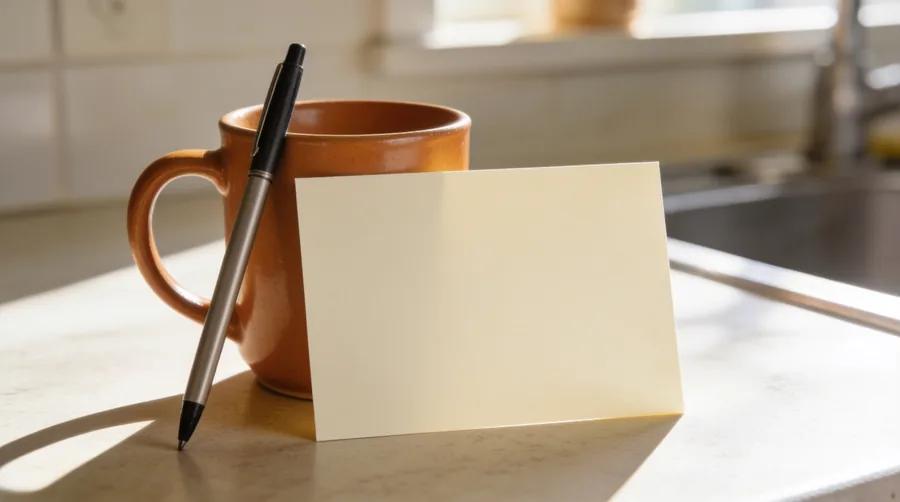
You do not need an app for this, and I would argue you should not use one, because the phone is the thing you are trying to interrupt. A sticky note or an index card is better. Here is a simple way to fill it out.
- Brainstorm without judging. List things you actually enjoy or feel better after doing. Not things you think you should enjoy. If reorganizing a shelf genuinely calms you down, it goes on the list. This is where your own dopamine menu ideas come from, not someone else's.
- Sort them into courses. Drop each one into starters, mains, sides, desserts, or specials based on how long it takes and how much it gives back. Some things fit two courses. That is fine.
- Assign a time box to every single item. This is the step people skip, and skipping it is why menus fail. A dessert with no timer is just permission to scroll. Write the number of minutes next to it.
- Keep it short and keep it visible. Five or six options per course is plenty. Stick it where you will see it in the danger moments: on your desk, on the fridge, or by the sofa where the evening scroll usually starts.
- Adjust after a week. Notice which items you actually reach for and which you never touch. Cut the dead weight. The menu should reflect the real you, not the aspirational one.
If you have been wondering how to stop doomscrolling and nothing has stuck, this is the part that changes the odds. The reason "just put the phone down" fails is that it leaves a vacuum, and your brain hates a vacuum when it is under-stimulated. Deciding what to do instead of scrolling before the craving hits means you are choosing from a clear head, not a foggy one.
Does a Dopamine Menu Actually Work?
Here is where I have to be straight with you, because a lot of wellness writing would not be. There are no large clinical trials of "dopamine menus" specifically. It is an internet-born tool, and nobody has run it through a controlled study with hundreds of participants. Anyone promising you research-proven results from a dopamenu is overselling it (The Conversation).
That said, the idea does not float in a vacuum. Deliberately scheduling small, rewarding activities is a recognized way to lift mood and motivation. What the dopamine menu adds is packaging: it takes a known principle and makes it easy to use in the exact moment you need it. So the honest verdict is that it is a practical aid, not a cure. If your low mood or attention problems run deep, a menu is not a substitute for talking to a professional. For the ordinary problem of losing your evenings to a feed, it is a genuinely useful nudge, and it costs you nothing to try.
Making It Stick Without Turning It Into a Chore
The failure mode for any tool like this is that it becomes one more thing to feel guilty about. A few guardrails keep that from happening. Do not aim for perfection: if you scroll anyway some nights, the menu did not fail, and it will be there tomorrow. Protect the desserts, because cutting them entirely tends to backfire and makes the feed more tempting, not less. Keep them, cap them, and set the timer.
Put the menu where the temptation lives, since one in a drawer is useless and one taped to the coffee table actually gets read. And let it evolve. The best dopamine menu is not the cleverest one, it is the one you actually glance at when your thumb starts drifting toward the app you already regret opening.
Key Takeaways
Browse the full mindful living category for more on attention, screen habits, and building a calmer daily rhythm.
- A dopamine menu is a short, pre-written list of enjoyable, time-boxed activities you pick from instead of reaching for your phone when you feel stuck or under-stimulated.
- It was popularized by Jessica McCabe and Eric Tivers, who coined "dopamenu," originally as a tool for ADHD brains, though the scrolling problem it solves is now close to universal.
- The structure borrows from a real menu: starters (quick resets), mains (longer and genuinely satisfying), sides (paired with a boring task), desserts (fun but capped), and occasional specials.
- The single most important rule is to time-box every item and set an actual timer, so a short dessert does not become another long scroll.
- There is no literal "dopamine detox." Your brain needs dopamine, and this is a behavioral planning tool, not a chemistry reset.
- No big clinical trials back the menu specifically, but scheduling small rewarding activities is well-supported behaviorally. Treat it as a practical aid, not a cure.
Frequently Asked Questions
What is a dopamine menu?
A dopamine menu is a short, pre-made list of enjoyable, time-bounded activities you choose from when you feel stuck, bored, or overwhelmed. Instead of deciding what to do in the moment your willpower is lowest, you decide in advance and keep the list somewhere visible. The goal is to reset briefly and return to the task in front of you, rather than defaulting to your phone.
How do you make a dopamine menu?
List activities you genuinely enjoy or feel better after doing, then sort them into courses: starters (quick, 2-5 minutes), mains (longer and more rewarding), sides (paired with a boring task), desserts (fun but easy to overdo), and occasional specials. Give every item a time limit, keep the list short, and post it where you would normally start scrolling. Adjust it after a week based on what you actually reach for.
What should be on a dopamine menu?
Concrete, low dopamine activities that suit your real life. Starters might be stepping outside, stretching, or making tea. Mains could be a phone-free walk, cooking, reading a chapter, or a hobby project. Sides pair something small with a chore, like a podcast while doing dishes. Desserts are the tempting stuff, such as one capped episode or a timed game. Specials are bigger treats you plan for occasionally, like a hike or a night out.
Does a dopamine menu actually work?
There are no large clinical trials of dopamine menus specifically, so anyone promising research-proven results is overselling it. That said, the idea rests on solid behavioral ground, because deliberately scheduling small rewarding activities is a recognized way to lift mood and motivation. Treat it as a practical aid for everyday scrolling habits, not a cure. If low mood or attention problems run deep, speak to a professional.
Wellness Tabloid is reader-supported: this page shows ads and some outbound links may be affiliate links.
Fact-checked against cited sources. Reviewed by the Wellness Tabloid editorial team.