High-Protein Meal Prep for Beginners: 5 Recipes That Take Under an Hour

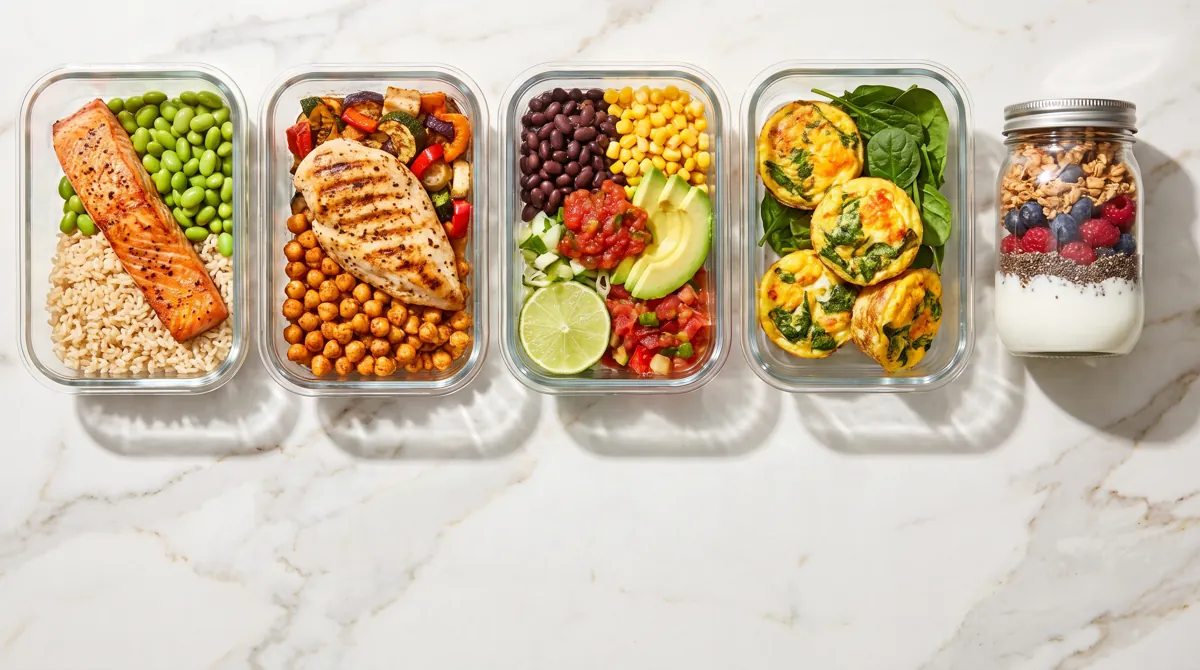
High protein meal prep means batch-cooking meals with at least 25–40 grams of protein per serving, then storing them in the fridge so you eat well all week without daily cooking. It keeps hunger in check because protein directly raises levels of appetite-suppressing hormones like GLP-1 and PYY. These five recipes cover breakfast, lunch, and dinner, and every single one is ready in under an hour. Once you have the protein piece sorted, a good morning routine helps you actually eat what you prepped instead of skipping breakfast in a rush.
TL;DR
- Five beginner recipes hit 25 to 42 grams of protein each and are ready in under an hour.
- They cover every meal: Greek yogurt parfait jars (~30g), sheet pan chicken and chickpeas (~42g), and salmon and edamame bowls (~40g).
- Most keep 4 to 5 days refrigerated. Cooked salmon is the exception at 3 days.
Why Protein Specifically
Protein does something carbohydrates and fats do not do as efficiently: it triggers real, measurable satiety signals. A 2021 University of Alberta study published in PMC followed 43 adults and found that a high-protein meal led to significantly higher fat oxidation (1.07 ± 0.33 g/session, p=0.003) and measurably reduced hunger, with raised GLP-1 and PYY levels after eating (Oliveira, Boulé et al., PMC 2021).
That is not a minor effect. Those are the same hormones targeted by certain weight-management medications, and protein activates them through food.
A 2020 systematic review across 10 studies and 1,079 participants found that higher protein intake may enhance fullness, with 6 out of 10 studies showing improved satiety and meal satisfaction (de Carvalho et al., PubMed 2020). The effect is consistent enough to plan around.
The Mayo Clinic's higher-protein meal plan targets roughly 25–30 grams of protein per meal as a general guideline for adults. The recipes below hit that range or exceed it.
What You Actually Need Before You Start
Keep the equipment list short. You need glass or BPA-free plastic containers with tight-fitting lids, a sheet pan, a standard muffin tin (12-cup), a rice cooker or saucepan, and a large skillet. That is it.
Glass containers are worth the investment because they go from fridge to microwave without chemical leaching concerns. Aim for 2-cup and 4-cup sizes. Buy at least 10 containers before your first prep session so you are not washing between recipes. If you want to extend the same approach to purely plant-based proteins, vegetarian meal prep ideas cover lentils, chickpeas, and tempeh using the same container-and-batch logic. Browse the full range of options in the Food and Kitchen category.
The 5 Recipes
1. Greek Yogurt Parfait Jars
Category: High protein breakfast meal prep | Time: 5 minutes active | Protein per serving: ~30g
- 1 cup plain full-fat Greek yogurt (Fage 5% or Chobani whole milk, 17–18g protein)
- 2 tablespoons natural almond butter (7g protein)
- 1/4 cup rolled oats, dry (4g protein)
- 1/4 cup mixed berries, fresh or frozen-thawed
- 1 tablespoon chia seeds (2g protein)
- Optional: drizzle of honey
- Layer the Greek yogurt at the bottom of a wide-mouth mason jar or tall container.
- Add the dry rolled oats directly on top of the yogurt. They will soften overnight in the fridge without becoming mushy.
- Spoon the almond butter in a small dollop in the center.
- Add berries and chia seeds on top.
- Seal and refrigerate. Prep five jars in under 20 minutes total. They keep for four days.
Protein note: Greek yogurt brand matters here. Fage 5% delivers 18g per cup versus 13g in some flavored versions. Read the label, not the marketing.
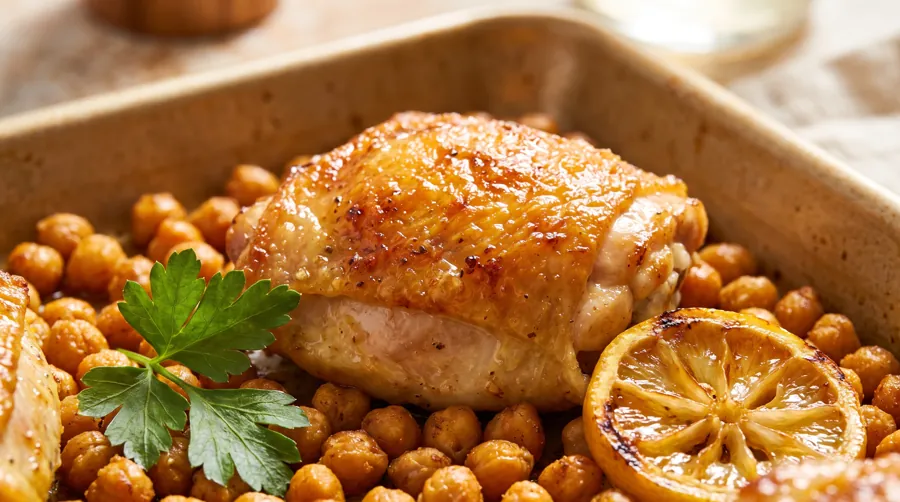
2. Sheet Pan Lemon Herb Chicken Thighs with Roasted Chickpeas
Category: High protein lunch meal prep | Time: 45 minutes (10 min prep, 35 min oven) | Protein per serving: ~42g
- 6 bone-in, skin-on chicken thighs (about 150g each, raw)
- 1 can (400g) chickpeas, drained, rinsed, and patted very dry
- 3 tablespoons olive oil
- Zest and juice of 1 lemon
- 4 garlic cloves, minced
- 1 teaspoon dried oregano
- 1 teaspoon smoked paprika
- Salt and black pepper
- Fresh parsley for serving (optional)
- Preheat your oven to 220°C (425°F). Line a large sheet pan with foil.
- In a bowl, mix olive oil, lemon zest, lemon juice, garlic, oregano, paprika, salt, and pepper. Add chicken thighs and toss to coat thoroughly.
- Toss the dried chickpeas with a tablespoon of olive oil, a pinch of smoked paprika, and salt in a separate bowl.
- Arrange chicken thighs skin-side up on one half of the pan. Spread chickpeas in a single layer on the other half.
- Roast for 35 minutes, until the chicken skin is deeply golden and an internal thermometer reads 74°C (165°F). The chickpeas should be crunchy and slightly charred at the edges.
- Let cool for 10 minutes before dividing into containers. Store the chickpeas separately if you want them to stay crisp, or combine for a softer texture after reheating.
Protein note: One 150g chicken thigh contributes roughly 28g protein. One half-cup of chickpeas adds about 7g. Together, one serving (one thigh plus chickpeas) lands at approximately 35–42g depending on exact weight.
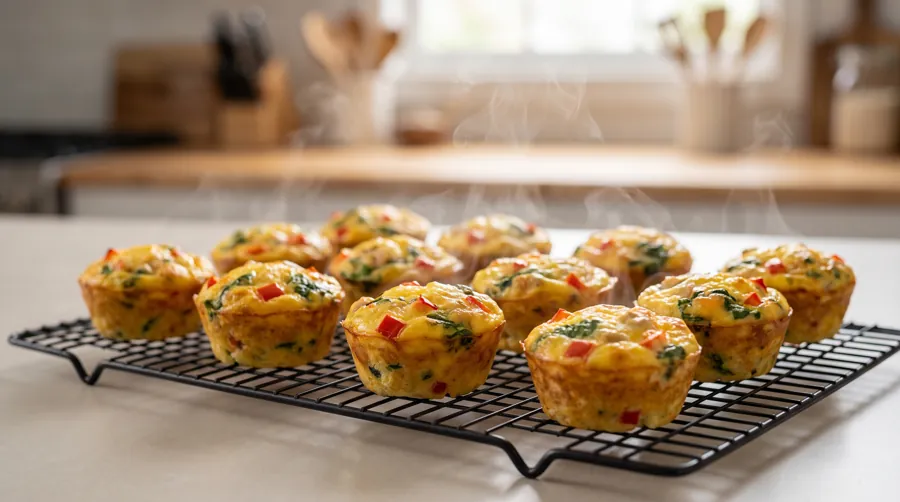
3. Turkey and Egg Muffins
Category: High protein breakfast meal prep | Time: 30 minutes (10 min prep, 20 min bake) | Protein per muffin pair: ~25g
- 8 large eggs
- 200g ground turkey (93% lean)
- 1/2 red bell pepper, finely diced
- 1/2 cup baby spinach, roughly chopped
- 1/4 cup shredded mozzarella
- 1/2 teaspoon garlic powder
- 1/2 teaspoon dried Italian seasoning
- Salt and pepper
- Cooking spray
- Preheat oven to 190°C (375°F). Grease a 12-cup muffin tin generously with cooking spray.
- Cook ground turkey in a skillet over medium-high heat for 5–6 minutes, breaking it up as it browns. Season with garlic powder, Italian seasoning, salt, and pepper. Drain any excess fat.
- Whisk eggs in a large bowl. Add the cooked turkey, bell pepper, spinach, and mozzarella. Mix well.
- Pour the mixture evenly into the 12 muffin cups, filling each about three-quarters full.
- Bake for 18–20 minutes, until the centers are set and the tops are just beginning to turn golden. A toothpick inserted in the center should come out clean.
- Cool for 5 minutes before removing. Store in an airtight container for up to 4 days. Reheat two at a time for 60–90 seconds in the microwave.
Protein note: Two muffins deliver roughly 25g protein: approximately 12g from two eggs, 10g from the turkey portion, and 3g from the cheese and vegetables.
4. Cottage Cheese and Black Bean Burrito Bowls
Category: High protein lunch meal prep | Time: 20 minutes | Protein per serving: ~35g
- 1 cup low-fat cottage cheese (Good Culture or similar, 24g protein per cup)
- 1 can (400g) black beans, drained and rinsed
- 1 cup brown rice, cooked (about 2 cups dry, cooked in advance)
- 1/2 cup corn kernels (frozen, thawed)
- 1/2 cup salsa
- 1 teaspoon cumin
- 1/2 teaspoon chili powder
- Juice of 1 lime
- Fresh cilantro (optional)
- Warm the black beans in a saucepan with cumin, chili powder, and a pinch of salt over medium heat for 3–4 minutes.
- Divide cooked brown rice among four containers.
- Add a layer of seasoned black beans, then corn, then a quarter-cup of salsa per bowl.
- Add a large scoop of cottage cheese (about 1/4 cup per bowl) directly on top. Squeeze lime juice over everything.
- Seal and refrigerate. When eating, stir everything together or keep the cottage cheese separate and mix just before eating if you prefer the contrast in texture.
Protein note: Cottage cheese is the protein anchor here, at roughly 14g per half-cup. Combined with black beans (7g per half-cup) and brown rice (4g per cup), one bowl lands close to 35g.
5. Salmon and Edamame Rice Bowls
Category: Dinner meal prep | Time: 40 minutes | Protein per serving: ~40g
- 4 salmon fillets, skin-on (about 170g each)
- 2 cups shelled edamame, frozen
- 2 cups jasmine rice, dry (yields 4 cups cooked)
- 3 tablespoons low-sodium soy sauce
- 1 tablespoon sesame oil
- 1 tablespoon rice vinegar
- 1 teaspoon fresh grated ginger
- 2 garlic cloves, minced
- 1 tablespoon sesame seeds
- 2 green onions, sliced
- Cook jasmine rice according to package directions. While rice cooks, preheat oven to 200°C (400°F).
- Mix soy sauce, sesame oil, rice vinegar, ginger, and garlic in a small bowl to make the marinade.
- Place salmon fillets skin-side down on a lined baking sheet. Spoon the marinade over each fillet generously.
- Bake salmon for 12–14 minutes, until the flesh flakes easily with a fork and is opaque throughout.
- While salmon bakes, boil edamame for 3–4 minutes from frozen, then drain.
- Divide cooked rice into four containers. Add edamame alongside the rice. Place one salmon fillet on top of each bowl.
- Drizzle any remaining pan juices over each bowl. Top with sesame seeds and green onions.
- Store refrigerated for up to 3 days. Reheat covered with a damp paper towel for 2 minutes.
Protein note: A 170g salmon fillet delivers roughly 34g protein. Half a cup of edamame adds another 8g. Together, one bowl is close to 40–42g protein.
Timing at a Glance
| Recipe | Prep Time | Cook Time | Protein Per Serving |
|---|---|---|---|
| Greek Yogurt Parfait Jars | 5 min | None | ~30g |
| Sheet Pan Lemon Herb Chicken + Chickpeas | 10 min | 35 min | ~42g |
| Turkey and Egg Muffins | 10 min | 20 min | ~25g (per pair) |
| Cottage Cheese Black Bean Burrito Bowls | 10 min | 10 min | ~35g |
| Salmon and Edamame Rice Bowls | 10 min | 30 min | ~40g |
Watch: Simple High Protein Meal Prep on a Budget
If you prefer to see the process before trying it yourself, this video covers budget-friendly meal prep with good protein totals and a realistic kitchen setup. It is a useful reference for getting the assembly rhythm down.
The biggest takeaway from watching a prep session like this: the order of operations matters. Start the longest-cooking item first (the oven recipes), then handle the stove and no-cook items while you wait. You can easily finish all five recipes in the same 45-minute window with overlapping cook times.
How to Mix and Match Through the Week
You do not need to eat the same meal twice in a row. Here is one way to distribute five recipes across a five-day week without monotony.
Mornings rotate between the parfait jars (3 days) and turkey egg muffins (2 days). Lunches alternate the sheet pan chicken and the burrito bowls. Dinner is the salmon and edamame rice bowls, with one or two evenings where you reheat leftover lunch items instead.
A few practical rules. Salmon keeps well for three days, not five, so make it mid-week or plan it for Monday through Wednesday. The chicken and burrito bowls both keep four to five days without issue. Parfait jars are best within three to four days before the oats get overly soft.
The biggest barrier for most beginners is choosing too many new recipes at once. Start with two or three of these in your first week and add from there. The sheet pan chicken recipe here pairs naturally with the one-pan chicken meal prep variations covered in detail elsewhere, giving you even more spice profiles to rotate through without changing your Sunday workflow. If your mornings also need structure, a dedicated breakfast meal prep session can run alongside this prep in under an hour combined.
Key Takeaways
- High protein meal prep reduces daily decision fatigue and keeps appetite hormones (GLP-1, PYY) working in your favor.
- Aim for 25–40g protein per meal as a practical starting target.
- These five recipes range from 5 minutes to 45 minutes active time, with no single one exceeding one hour total.
- Start the longest oven recipe first, then layer in shorter prep tasks while it cooks.
- Salmon is the one item with a shorter fridge life (3 days). Everything else holds for 4–5 days.
- Glass containers are a one-time investment that makes the whole system easier to maintain.
Frequently Asked Questions
How much protein should I aim for per meal when meal prepping?
Most general guidelines, including those from the Mayo Clinic's higher-protein meal plan, suggest 25–30 grams per meal as a solid floor for adults focused on satiety and muscle maintenance. Athletes or people in a calorie deficit often do well targeting 35–45g per meal. The recipes in this article fall between 25g and 42g per serving, which covers both ranges depending on which ones you choose.
How long does high-protein meal prep last in the fridge?
Most cooked proteins (chicken, turkey, eggs, legumes) stored in airtight containers last 4–5 days in the fridge at or below 4°C (40°F). Cooked salmon is the exception: 3 days is the outer limit before quality drops noticeably. Greek yogurt parfait jars last 3–4 days. When in doubt, use your nose and eyes. If the color has shifted or there is any off smell, discard it.
Is meal prepping with chicken safe for 5 days?
Yes, as long as the chicken was fully cooked (internal temperature of 74°C / 165°F), cooled within two hours of cooking, and stored in a sealed container in the fridge at 4°C or below. The sheet pan chicken thighs in this article meet all of those criteria. Day five is fine. Day six is pushing it.
What are the best high-protein foods for meal prep?
Chicken thighs and breasts lead on volume and cost efficiency, at roughly 28–32g protein per 150g serving. Eggs deliver 6g each and keep well cooked. Canned legumes (black beans, chickpeas, lentils) are underrated: cheap, shelf-stable before cooking, and 7–9g protein per half-cup. Salmon and canned tuna both offer 25–30g per serving. Cottage cheese and Greek yogurt are the best refrigerated options for no-cook protein, both landing around 15–20g per cup.
Sources
1. Oliveira, Boulé et al. (University of Alberta, PMC 2021). "Consumption of a High-Protein Meal Replacement Leads to Higher Fat Oxidation, Suppression of Hunger, and Improved Metabolic Profile After an Exercise Session." https://pmc.ncbi.nlm.nih.gov/articles/PMC7824960/ 2. de Carvalho et al. (PubMed 2020). "Dietary protein and appetite sensations in individuals with overweight and obesity." https://pubmed.ncbi.nlm.nih.gov/32648023/ 3. Mayo Clinic Diet. "Higher Protein Meal Plan." https://diet.mayoclinic.org/us/meal-plans/higher-protein-meal-plan/
Wellness Tabloid is reader-supported: this page shows ads and some outbound links may be affiliate links.
Fact-checked against cited sources. Reviewed by the Wellness Tabloid editorial team.