Soft Life Meaning: What It Really Is and How to Start Living It

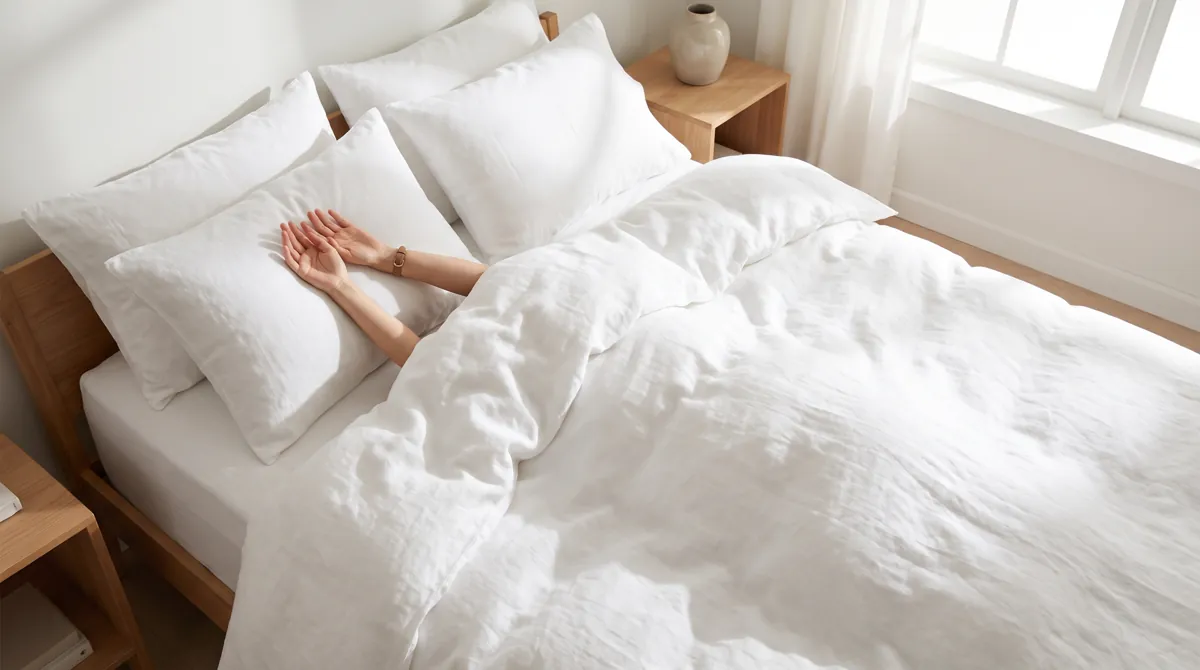
The soft life is a way of living that refuses to tie your worth to how much you suffer, endure, or produce. It started as a deliberate rejection of struggle culture among Nigerian women around 2019 to 2021, traveled through Black women's spaces in the US and UK, and landed on mainstream social media, where it often got flattened into a luxury aesthetic. This article cuts through that distortion, returns to the original meaning, and gives you concrete habits that actually work inside a busy, ordinary life.
TL;DR
- Soft life means not tying your worth to how much you suffer or produce. It began with Nigerian women around 2019 to 2021, before social media turned it into a luxury aesthetic.
- It is an internal shift, not a spending category; the core habits cost nothing.
- The need is real: a 2024 NAMI/Ipsos poll of 2,062 US workers found 52% burned out in the past year.
Where the Soft Life Idea Actually Came From
The phrase emerged on Nigerian Twitter and Instagram as a pointed cultural statement. Women were pushing back against a norm that celebrated female hardship as proof of strength and virtue. Struggling was not a badge of honor, the argument went; it was just struggle. Joy, rest, and comfort were not indulgences to be earned after suffering enough. They were rights.
By 2022 and 2023, the term had moved into US and UK TikTok. Something got lost in translation. The "soft life" became shorthand for expensive skincare, business-class flights, and linen sets that cost three hundred dollars. That is a real thing people post about, but it has almost nothing to do with the original idea.
Maya Elious, a branding coach who has talked about this publicly, frames it as working hard for what you actually want rather than grinding through things that drain you. The softness is internal first. The thread count is optional. If you want to go further than the concept and actually build these habits into your schedule, the practical guide to living softly while keeping your job picks up exactly where this history leaves off.
What "Soft Life" Means, Practically
At its core, soft life means not organizing your identity around endurance. A few things that follow from that:
- Rest does not need to be earned. You do not sleep well because you were productive enough that day. You sleep well because you are a person who needs sleep.
- Peace is a decision, not a reward. You can choose lower-friction paths through your day without it being laziness.
- Saying no is not failure. Declining a commitment that costs you more energy than it returns is a form of self-management, not avoidance.
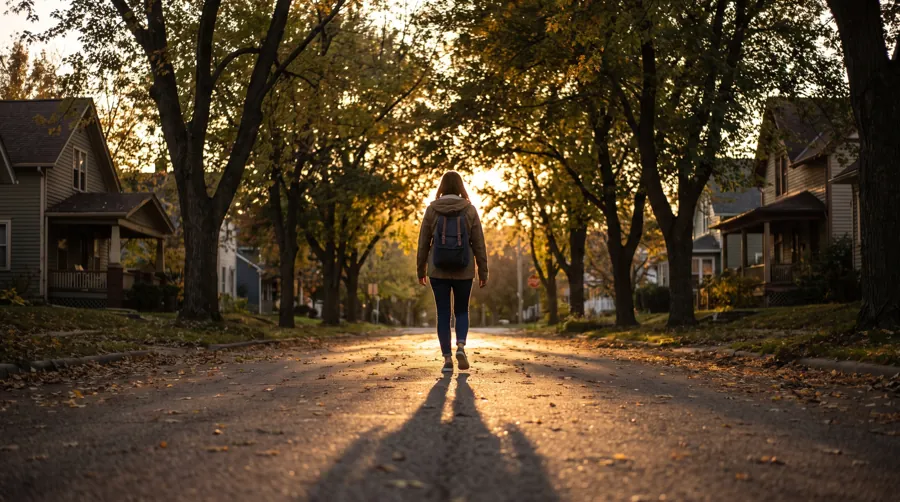
- Small comforts count. A good cup of coffee made slowly, a ten-minute walk at noon, a phone call with someone who actually makes you laugh. These are not trivial.
None of this requires money you do not have. That is the part the algorithm erased.
Why the Science Backs This Up
The instinct to push through everything, always, has a physiological cost that is well-documented. A 2024 NAMI/Ipsos poll of 2,062 employed US adults found that 52% reported feeling burned out because of their jobs in the past year. Research published in PMC in early 2024 shows that contemplative practices such as meditation and intentional rest reduce stress by facilitating what researchers call "deep rest," a state in which cellular resources shift away from the stress response and toward physiological repair.
Chronic stress disrupts the HPA axis, the hormonal system that regulates cortisol. Multiple studies indexed on PubMed show that prolonged burnout leads to cortisol dysregulation, which is linked to higher cardiovascular risk and impaired cognitive function. The body is not designed to stay in alarm mode indefinitely. Building in ease is not weakness; it is basic maintenance.
The CDC tracked health worker mental health from 2018 to 2022 and found that the share reporting burnout "very often" rose from 11.6% to 19%. That is nearly double in four years, inside a single profession. The trend is not unique to healthcare.
The Soft Life Era vs. Hustle Culture: What Actually Changed
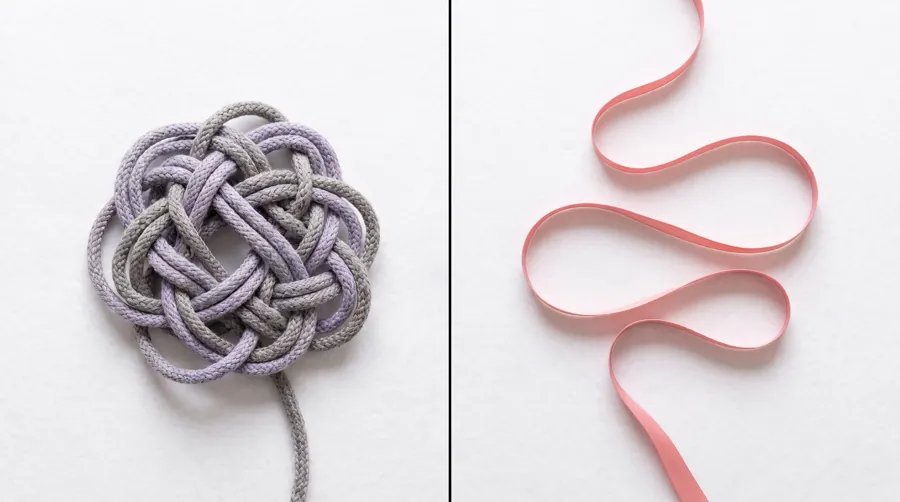
Hustle culture, which peaked somewhere between 2012 and 2019, told a specific story: the person who sleeps the least, works the most, and suffers the most gracefully wins. The evidence for this being a path to happiness was always thin. What it reliably produced was exhaustion dressed up as ambition.
The "soft life era" is partly a generational correction. Gen Z specifically has been vocal about rejecting the premise that suffering equals merit. This does not mean refusing to work hard. It means refusing to treat difficulty as the goal rather than a sometimes-unavoidable means to an end.
A psychological analysis published on ResearchGate in 2024, "Soft Life vs. Hard Life Mentality," found that people who deliberately seek ease and reduce unnecessary friction in their lives report higher subjective well-being scores than those who treat all hardship as character-building, regardless of whether the hardship is chosen or imposed.
How to Start Living a Soft Life (Without Quitting Your Job)
You do not need a sabbatical, a remote cabin, or a financial windfall. Here is what actually changes things:
Audit where your energy goes
For one week, notice which parts of your day feel genuinely draining versus neutral or good. Be specific. Not "work is tiring" but "the 4pm status meeting where nothing gets decided." You cannot soften what you have not named.
Find the friction points and reduce them
A lot of daily exhaustion is structural, not inevitable. Meal prep on Sunday reduces the 6pm "what are we eating" spiral. Turning off email notifications after 7pm is not a luxury; it is a boundary that takes 30 seconds to set. Automating your savings is quieter than manually transferring money each month and doing the math each time. Even digital noise counts: a weekend digital declutter removes many of the low-grade attention drains you have stopped noticing.
Practice stopping before you are done
The Zeigarnik effect is a well-studied tendency in psychology: unfinished tasks linger in working memory more than completed ones. But there is a useful counter-move. When you leave a task at a deliberate stopping point with a note about the next step, your brain can actually let it go. Novelist Ernest Hemingway stopped writing mid-sentence each day so he always knew how to start again. You can stop mid-task for the same reason.
Protect at least one part of each day as non-productive time
Not recovery time. Not self-improvement time. Just time that is not optimized for anything. A walk without a podcast. Sitting outside with no phone. Reading fiction with no goal. These moments are not gaps in productivity. They are the point. This connects to a broader concept that goes beyond lifestyle preference: there is real substance to the question of what intentional living actually means and how to act on it day-to-day.
Use the "good enough" rule on more things
Not everything deserves your best effort. Dinner on a Tuesday can be mediocre and still nourishing. The email reply to a colleague can be two sentences. The apartment does not need to be immaculate before you can relax. Perfectionism applied uniformly is exhausting and mostly invisible to other people anyway.
Build small, specific pleasures into your week
| Category | Example | Time/Cost |
|---|---|---|
| Morning | 10 minutes outside before looking at your phone | Free |
| Midday | Eat lunch away from your desk | Free |
| Evening | One episode of something genuinely fun, no guilt | Free |
| Weekly | One "no-plans" evening where you decide day-of | Free |
| Monthly | One thing you have been meaning to try (class, walk, restaurant) | Variable |
Soft Life Quotes Worth Keeping
A few lines that have circulated because they cut to something true:
- "Rest is not something you get. It is something you allow." (widely attributed, origin unclear)
- "The soft life is not about doing less. It is about suffering less unnecessarily." (from Nigerian soft life discourse, early 2020s)
- "I do not want a hard life anymore. I want a warm one." (circulated widely on Black Twitter, 2021)
What the Soft Life Is Not
Worth saying clearly:
- It is not avoiding responsibility. Bills, relationships, and work still exist.
- It is not passive. You have to actively build the conditions for ease; they do not appear on their own.
- It is not only for people with money. The original framing was explicitly about reclaiming rest as a right, not purchasing it.
- It is not a personality aesthetic. You do not have to like neutral tones and linen to reject unnecessary suffering.
The ideas here sit naturally within a wider approach to mindful living ; if this framing resonates, the other articles in the category offer practical entry points on specific habits, routines, and environments.
Key Takeaways
- The soft life started as a statement by Nigerian women rejecting the cultural expectation of female endurance, not as a luxury lifestyle trend.
- 52% of employed US adults reported burnout in 2024 (NAMI/Ipsos poll), making intentional ease not a trend but a health consideration.
- Research published in PMC in 2024 shows that intentional rest and contemplative practices produce measurable physiological benefits, including reduced cortisol dysregulation.
- The core practice is reducing unnecessary friction, not eliminating effort.
- Small, consistent actions (protecting non-productive time, using "good enough" deliberately, building specific small pleasures) compound over weeks.
- None of the most impactful soft life habits require spending money.
A Video Worth Watching
Maya Elious's conversation on what it means to work hard while actually living softly is one of the cleaner explanations of why the concept gets misread as passivity. She is direct about the difference between ease as an outcome of intentional choices versus ease as avoidance.
Frequently Asked Questions
What does "soft life" mean?
The soft life is a philosophy, originating in Nigerian social media around 2019 to 2021, of choosing ease and peace as a baseline rather than something you earn through suffering. It means reducing unnecessary friction in your daily life, setting limits that protect your energy, and treating rest as a right rather than a reward.
Is the soft life just for wealthy people?
No. The original meaning had nothing to do with luxury consumption. Social media turned it into an aesthetic of expensive things, but the core idea is about internal orientation: refusing to measure your worth by how much you endure. Most of the practical habits involved cost nothing.
Can you live a soft life and still be ambitious?
Yes, and this is a common misconception. The soft life is about reducing unnecessary struggle, not abandoning goals. The distinction is between choosing difficult things because they matter to you versus tolerating difficulty as proof of virtue. Maya Elious frames it explicitly as working hard for what you actually want, while softening everything that surrounds that work.
How do I start living a soft life if I am used to hustle culture?
Start with one specific friction point in your day: a meeting that drains you, a habit of checking email late at night, or something you do out of guilt rather than intention. Changing that one thing and noticing the result is more useful than overhauling your entire routine at once. The goal is evidence from your own life that ease is not weakness.
Sources
- What Is the Soft Life Trend and Is It Really New? - LifeStance Health
- Deep Rest: An Integrative Model of How Contemplative Practices Combat Stress and Enhance the Body's Restorative Capacity - PMC (NIH)
- The 2024 NAMI Workplace Mental Health Poll - NAMI
- Soft Life vs. Hard Life Mentality - ResearchGate
- Health Workers Face a Mental Health Crisis - CDC VitalSigns
Wellness Tabloid is reader-supported: this page shows ads and some outbound links may be affiliate links.
Fact-checked against cited sources. Reviewed by the Wellness Tabloid editorial team.